
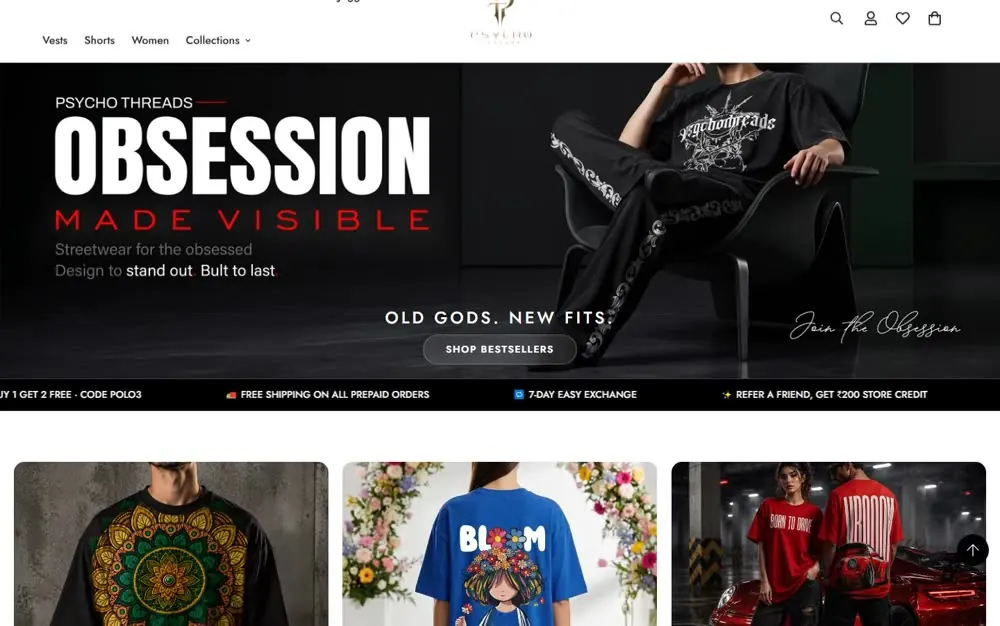
 D2C streetwear · IndiaPsycho ThreadsPsycho Threads makes heavyweight oversized tees and streetwear with mythology, folk and dark-art graphics. We designed and built a simple, clean Shopify store that puts the artwork first and keeps every offer visible.Shopify store · UX
Case study · Delivery & logistics · Nigeria
ShapShap: Plugs into any store.
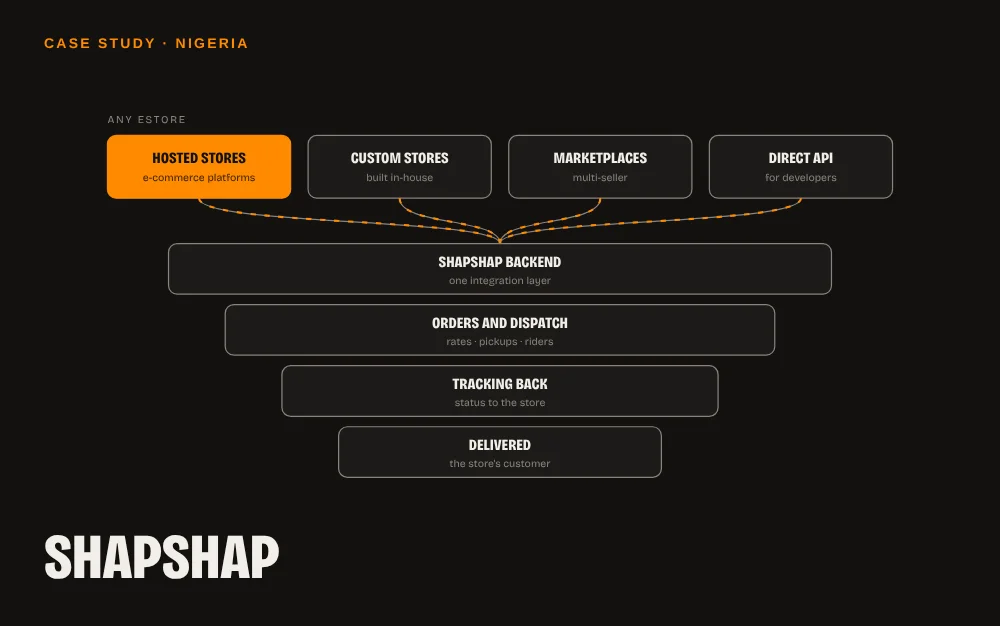
ShapShap is a delivery and logistics platform in Nigeria. It does not serve the public: it serves businesses and stores. Pencilbuddha built the ShapShap backend system so that any online store can connect to it, send its orders for delivery and get tracking back, without the store having to change how it works.
By Kishore Ravi, founder · Updated
01 · The brief
Every storeis built differently.
A delivery service for businesses lives or dies by how easily stores can use it. If a store has to copy orders by hand, it will not stay. But online stores in Nigeria run on many different systems, from popular e-commerce platforms to stores built from scratch.
ShapShap needed a backend that could meet every store where it already is.
THE USERS
Businesses, not shoppers
ShapShap serves stores and businesses that need deliveries made.
THE PROBLEM
Many store systems
Each one sends orders in its own way.
THE JOB
Connect to any eStore
One backend that any store can plug into.
02 · The backend
One layerbetween every store and the road.
We designed the backend around one idea: whatever the store, its orders become the same kind of ShapShap order inside. Store-specific connectors handle the differences at the edge, and everything behind them, from pricing to dispatch to tracking, works one way.
03 · An order's journey
From checkoutto the doorstep.
For a store, the whole thing should feel automatic.
- Connect. The store links its shop to ShapShap once.
- Order. When a customer buys, the order reaches ShapShap without retyping.
- Dispatch. ShapShap prices the delivery, arranges the pickup and assigns it.
- Track. Status updates flow back to the store and its customer.
04 · Built for business
Made forthe store owner.
Because ShapShap's customers are businesses, the system is built around their needs: bulk orders, many deliveries a day and status they can trust, rather than a consumer app for one-off parcels.
VOLUME
Many orders a day
Built for stores that ship every day, not once.
NO RETYPING
Orders flow in
Less manual work, fewer mistakes.
VISIBILITY
Status they can see
Tracking that reaches the store and its customer.
05 · Where it stands
Builtto connect.
We will add more detail here as ShapShap shares it.
Done
Built
- Backend system
- Store integration layer
Ongoing
Running
- Integrations with more stores
Diagrams show how the parts fit together. They are not a technical specification. ShapShap is a trademark of its owner.
Which services made ShapShap work?
The services behind this project. Each one has its own page, with more work and answers.
Which projects are like this one?
Case studies that share this project's work, then more clients we have done it for.
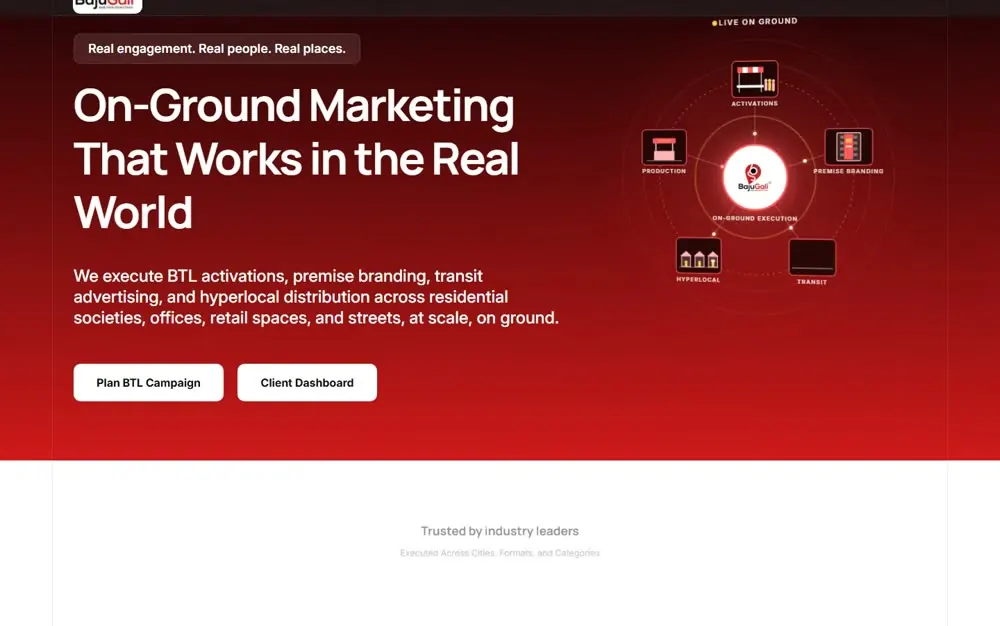 Community platform · IndiaBajuGaliThe society-management app and the growth funnel, before BajuGali was acquired by Adcrest.Read the case study
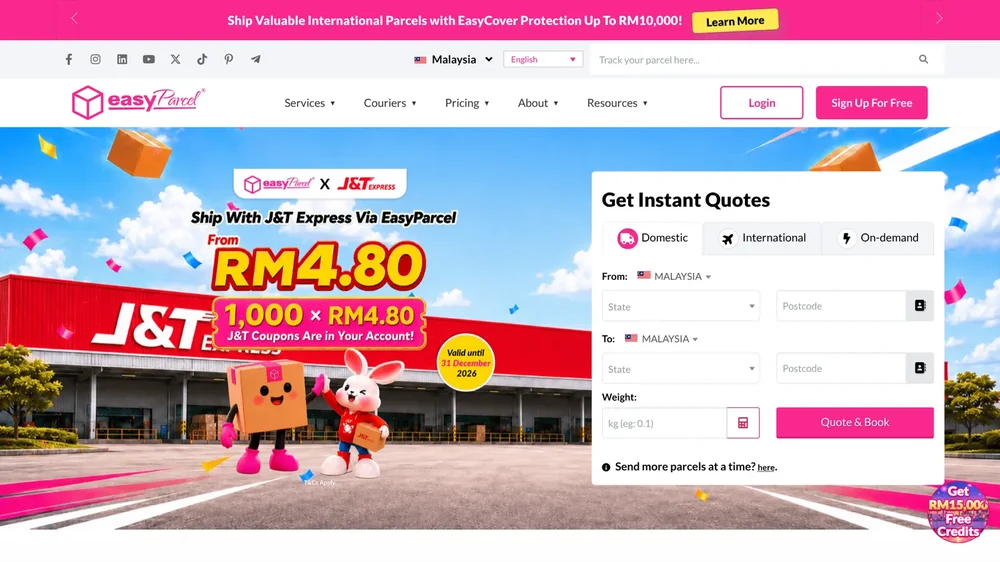 Delivery & logistics platform · MalaysiaEasyParcelBackend, APIs, apps and website for a Malaysian parcel platform.Read the case study
 Telecom · AfghanistanRoshanA telecom self-care app: usage, support, family SIMs, plans, rewards and personal offers.Read the case study
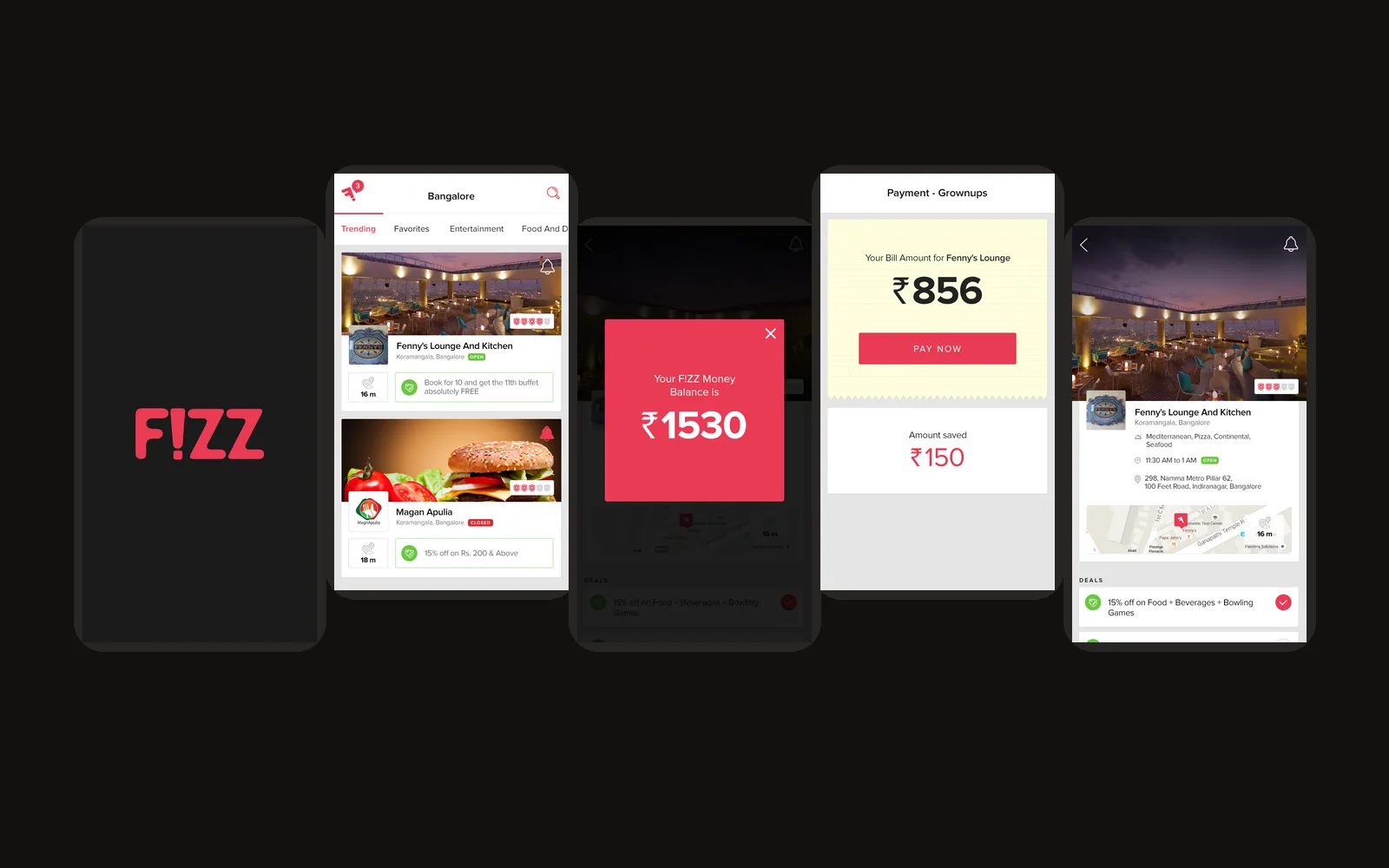 Mobile wallet & offers app · BangaloreFizzA mobile wallet for Bangalore's hangouts: iOS and Android apps, and the backend behind them.Read the case study
D2C streetwear · IndiaPsycho ThreadsPsycho Threads makes heavyweight oversized tees and streetwear with mythology, folk and dark-art graphics. We designed and built a simple, clean Shopify store that puts the artwork first and keeps every offer visible.Shopify store · UX
Picked for you
Where to next?
Suggestions based on what you're reading.
Community platform · IndiaBajuGaliThe society-management app and the growth funnel, before BajuGali was acquired by Adcrest.
Delivery & logistics platform · MalaysiaEasyParcelBackend, APIs, apps and website for a Malaysian parcel platform.
ServiceApps & softwarePencilbuddha designs and builds mobile apps, web apps, SaaS platforms and API integrations for founders and teams in Chennai, Coimbatore, Erode and Bangalore, and abroad.Got a project? Or just want to say hello?
Fear not.
Send the brief.
The raised hand is the abhaya mudra, the Buddha's gesture for "fear not". It's my promise on every brief.
Based in Erode, Tamil Nadu. Working with brands in Chennai, Coimbatore, Erode and Bangalore, and clients in 8 countries.